
In the footwear industry, product quality is built from every detail. While shoe uppers and outsoles often attract the most attention, the insole plays an important role in cushioning, comfort, fit, and the overall wearing experience.
For shoe manufacturers, footwear brands, wholesalers, and importers, finding a reliable insole supplier is essential for maintaining product consistency and developing competitive footwear.
Whether you are sourcing PU insoles for sneakers, arch support insoles for everyday shoes, or customized insoles for your own brand, understanding how to evaluate a manufacturer can help you make better purchasing decisions.
An insole is more than an accessory placed inside a shoe. Its material, shape, thickness, and structure can affect how the shoe feels when worn.
A suitable insole can help provide:
Cushioning: Helps absorb impact during walking and everyday movement.
Comfort: Creates a more comfortable surface under the foot.
Support: Provides additional structural support when designed for that purpose.
Breathability: Suitable fabrics and structures can help improve airflow.
Fit: Correct dimensions help the insole fit the footwear properly.
Durability: Appropriate materials and construction help maintain product performance.
For B2B buyers, the challenge is finding a product that meets the required specifications while also fitting the target market and budget.
Before contacting an insole factory, it is helpful to identify the type of product you need.
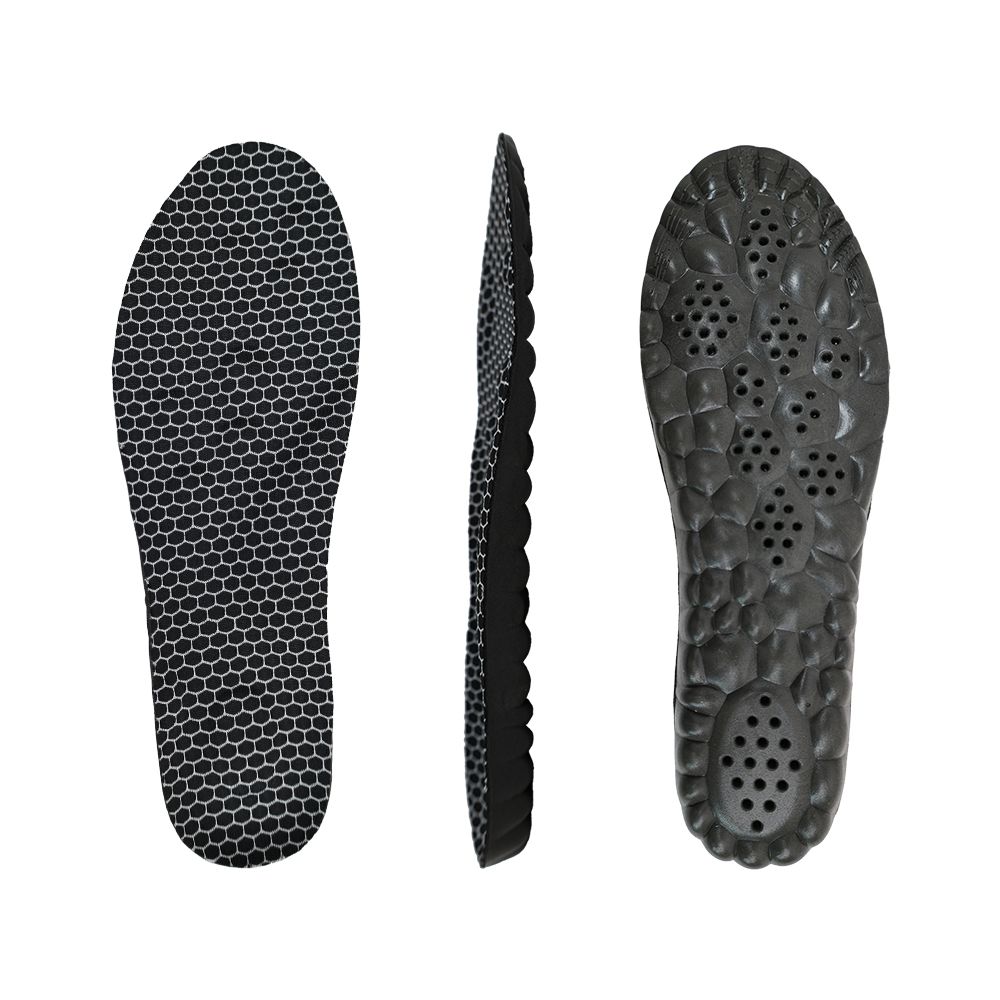
PU Insoles
PU insoles are widely used in footwear because different formulations and densities can provide different combinations of cushioning, resilience, and firmness.
Suitable for: sneakers, casual shoes, lifestyle footwear.
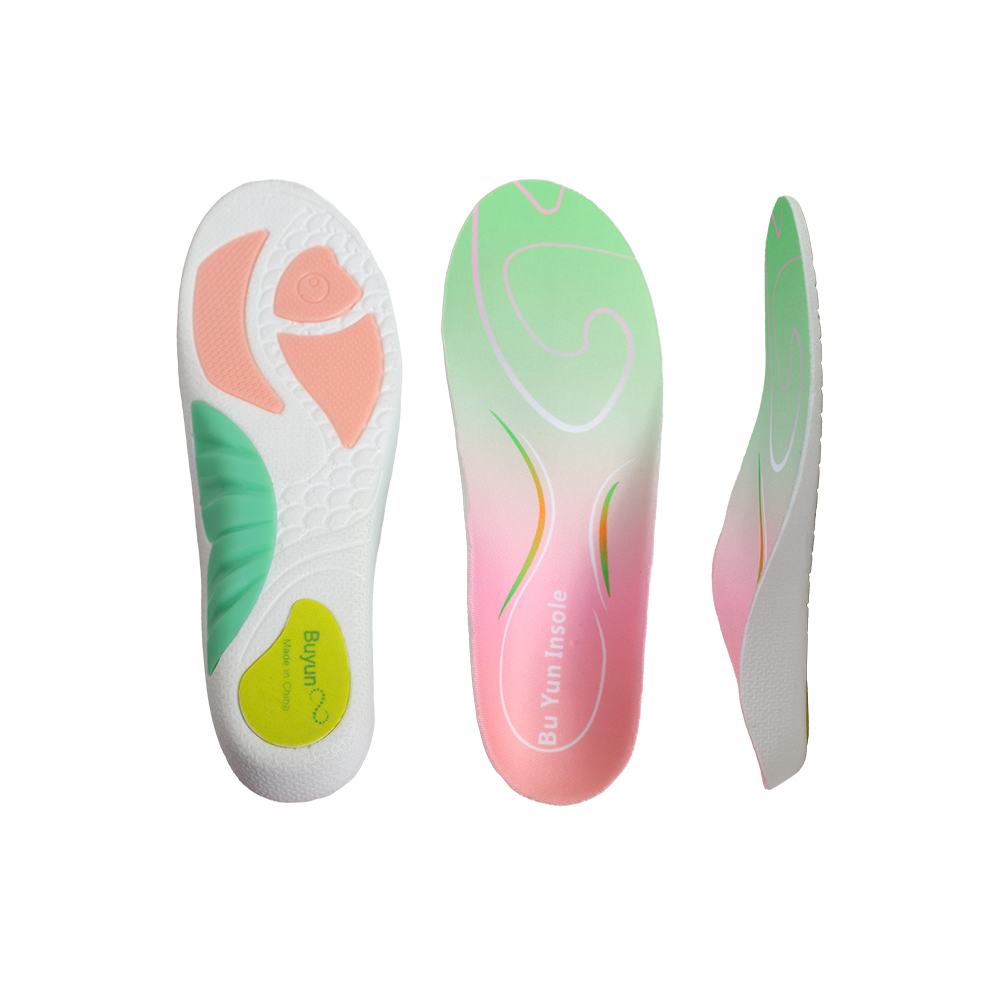
Arch Support Insoles
These insoles use a contoured structure to provide additional support around the arch. Some designs incorporate TPU support components and cushioning pads.
Suitable for: selected casual shoes, sneakers, and support-oriented footwear.
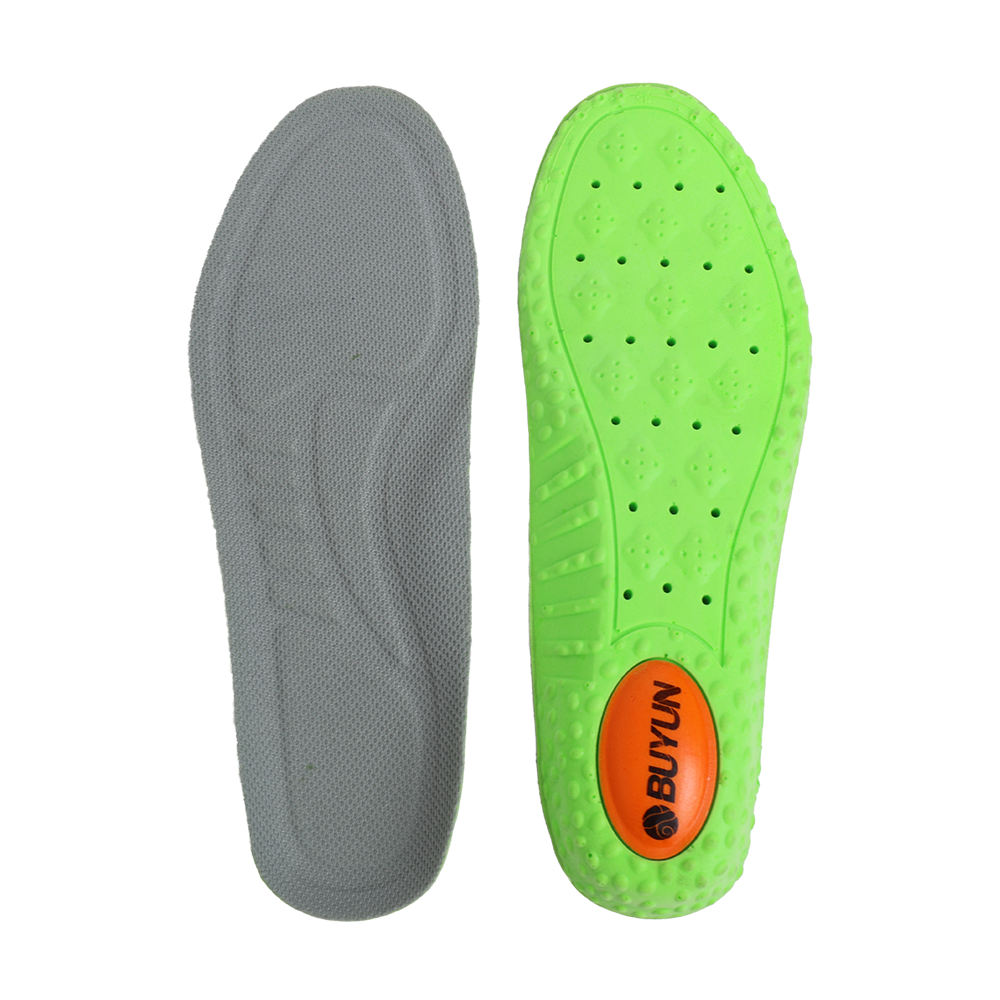
Sports Insoles
Sports insole designs may combine heel cushioning, forefoot cushioning, breathable fabrics, and structural support.
Suitable for: sports shoes, training shoes, and active footwear.
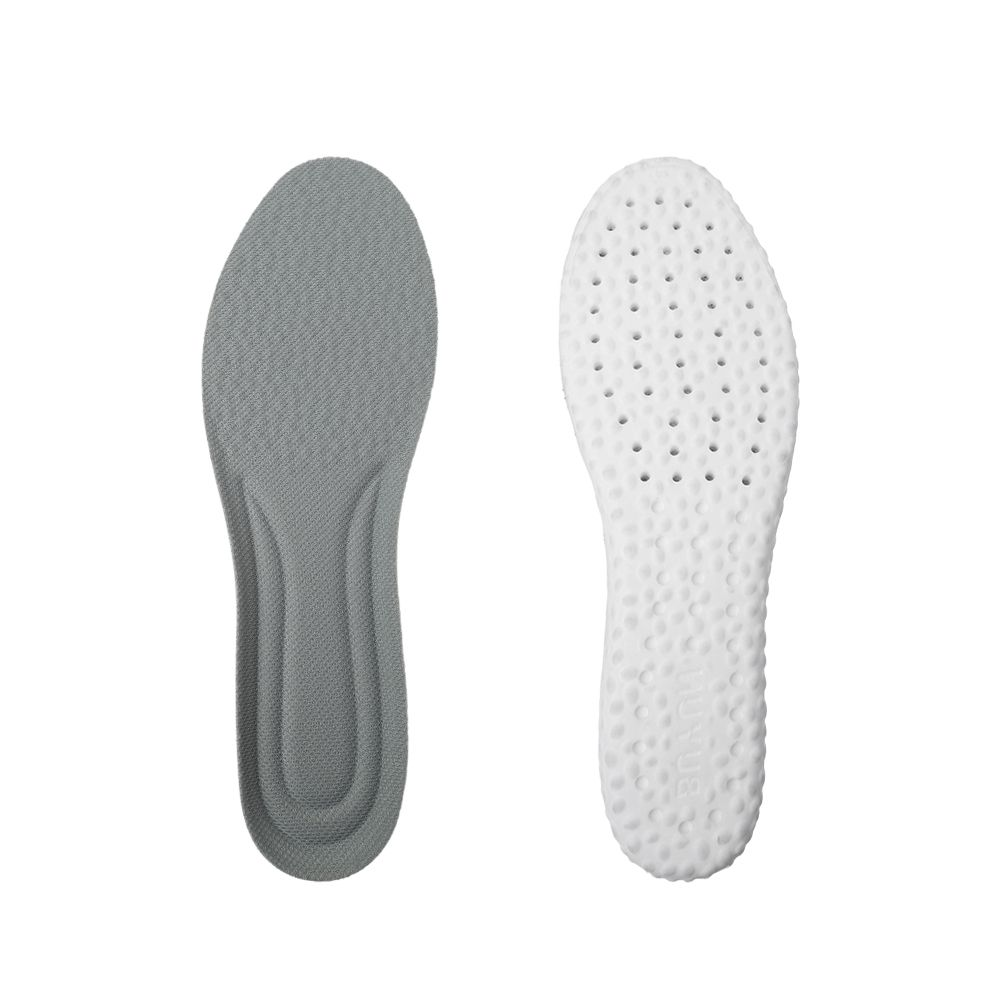
Comfort Insoles
These products focus on everyday wearing comfort, surface feel, and compatibility with the shoe's internal space.
Suitable for: daily footwear, casual shoes, and selected formal shoes.
The best option depends on the footwear construction, intended use, and performance requirements.
Material selection is one of the most important parts of insole development.
Material or Component | Main Characteristics | What Buyers Should Consider |
|---|---|---|
PU | Cushioning, resilience, adjustable density options | Hardness, rebound, thickness, and durability |
Latex | Flexible, soft feel | Thickness, resilience, and intended application |
Foam materials | Can provide lightweight cushioning | Compression behavior and recovery |
Breathable fabric | Surface comfort and potential airflow benefits | Texture, wear resistance, and color |
TPU | Structural support in suitable designs | Shape, firmness, and footwear compatibility |
Different materials can also be combined in one product.
For example, a molded PU insole may incorporate a breathable fabric surface and a TPU arch support shell.
The goal is to select materials that work together, not simply to choose the cheapest option.
A product photograph can show the appearance of an insole, but it cannot reveal every aspect of its quality.
Before placing a bulk order, buyers should evaluate several characteristics.
Check whether the material and finish are consistent across the samples or production batch.
Confirm that the insole matches the required size and fits inside the intended footwear.
Test whether the product feels too soft, too firm, or appropriate for the application.
Where relevant, evaluate how the material responds to pressure and recovers after compression.
Check the fabric's texture, attachment, appearance, and suitability for the shoe.
Inspect edges, molding details, surface finish, and any added components.
Ask how the manufacturer checks products during production and before shipment.
A clear specification sheet and approved sample can help both parties maintain consistent expectations.
Two PU insoles can look similar but feel quite different.
One reason is that their material formulations and densities may differ.
In general, lower-density PU may feel softer or lighter, while higher-density PU may feel firmer. However, density alone does not determine the complete performance of an insole.
Other factors include:
Material formulation
Product thickness
Molded shape
Cushioning zones
Fabric layers
Support structures
For this reason, buyers should communicate the desired feel and application to the supplier rather than specifying density alone.
For example, a buyer developing a casual sneaker might prioritize a soft, comfortable feel, while a structured insole may need a firmer platform.
The final choice should be confirmed through sample testing.
For footwear brands, customized insoles can help create a more consistent brand experience.
Depending on the product and manufacturing capabilities, customization may include the following.
Logo Customization
Add a brand logo to suitable fabrics or product components.
Color and Fabric
Select suitable fabric colors and surface materials according to product requirements.
Shape and Structure
Discuss dimensions, thickness, cushioning zones, and support components.
Packaging and Labels
Arrange suitable product bags, size labels, carton markings, and other packing details.
Custom projects may involve additional setup costs, material requirements, or minimum order quantities. These details should be confirmed before production.
Both factories and trading companies can play useful roles in the supply chain, but their operations may differ.
Factor | Direct Factory | Trading Company |
|---|---|---|
Production | Manufactures products in-house for its available product range | Usually sources from manufacturing partners |
Product communication | Can communicate directly about its own production processes | Coordinates between buyer and supplier |
Customization | Depends on the factory's actual equipment and capabilities | Depends on its manufacturing partners |
Quality control | Can manage inspections within its own production process | May coordinate inspections with suppliers |
Product range | Depends on its own manufacturing capabilities | May offer products from multiple factories |
A direct factory is not automatically the best choice for every order, and a trading company is not automatically less reliable.
Buyers should verify actual manufacturing capabilities, product quality, communication, and service before making a decision.
MOQ means Minimum Order Quantity.
Different insole models can have different MOQs depending on the materials, production process, and customization requirements.
For standard products, smaller trial orders may sometimes be possible.
For customized products, the required quantity may be affected by:
Special fabric or material purchasing
Logo printing
Custom colors
Molds or tooling
Individual packaging
Production setup
When requesting a quotation, provide your estimated quantity so the supplier can calculate pricing based on the actual order requirements.
A quotation should also clarify whether the price includes packaging, customization, and transportation.
Samples help buyers assess a product before committing to a large order.
A useful sample evaluation should include:
Appearance: Does the product match the approved design?
Fit: Does it fit inside the shoe properly?
Comfort: Does the underfoot feeling meet expectations?
Material: Are the materials consistent with the specifications?
Construction: Are the edges, fabric, and added components acceptable?
Performance: Does the product meet the agreed cushioning and support requirements?
If changes are required, the buyer and manufacturer can discuss adjustments before confirming the bulk order.
Whenever possible, test the insole inside the actual shoe rather than evaluating it only by hand.
A typical insole manufacturing workflow may include these stages:
Material Preparation
Prepare materials according to the confirmed product specifications.
Molding or Forming
Create the required shape and structure using the appropriate production method.
Trimming and Finishing
Refine edges and remove excess material where required.
Component Assembly
Add fabrics, support components, or cushioning elements according to the design.
Quality Inspection
Check appearance, dimensions, workmanship, and agreed requirements.
Packing and Shipment
Pack finished products and prepare the order for delivery.
The exact workflow varies according to the product's materials, construction, and manufacturing method.
BUYUN INSOLE specializes in footwear insole manufacturing, with a focus on PU insoles and products for different footwear applications.
Our product range includes:
PU Insoles — cushioning and resilient solutions for everyday footwear.
Arch Support Insoles — structured designs with additional arch support.
Sports Insoles — products designed for active footwear applications.
Comfort Insoles — solutions focused on everyday wearing comfort.
Customized Insoles — product and branding options according to project requirements.
We welcome inquiries from footwear brands, shoe manufacturers, wholesalers, distributors, and importers.
Whether you are sourcing existing models or exploring a customized project, sharing your specifications helps us understand your requirements and identify suitable options.
To help us understand your project, please provide the following information:
Information | Example |
|---|---|
Product type | PU insole / sports insole / arch support insole |
Size range | EU 35–46 or selected sizes |
Quantity | 1,000 pairs / 5,000 pairs / 10,000 pairs |
Logo | Standard product or customized branding |
Color | Available color or requested color |
Packaging | Bulk packing or individual packaging |
Destination | Country, city, or port |
You can also send a product photo or reference sample if you have a particular style in mind.
Based on your requirements, we can discuss suitable models, sample arrangements, customization feasibility, pricing, and shipping terms.
Choosing an insole supplier involves more than comparing prices.
The right supplier should understand your product requirements, provide clear specifications, support appropriate sample testing, and communicate effectively throughout the order process.
For footwear brands and wholesalers, paying attention to material selection, product structure, quality control, customization, and MOQ can help create a more reliable sourcing process.
BUYUN INSOLE welcomes B2B inquiries from footwear brands, shoe manufacturers, wholesalers, distributors, and importers looking for PU insoles, arch support insoles, sports insoles, and customized insole solutions.
Contact BUYUN INSOLE to discuss your next footwear project.
Sourcing insoles from China? These pages explain how we work with buyers:
Need a quotation or a sample? Contact our export team — we reply within 24 hours.
Contact: Grace Zhang
Phone: +8619836226519
Email: 19836226519@163.com
Add: Chengxi Industrial Park, Huixian Industrial Agglomeration Area, Huixian City, China
We chat
